
Packaging procurement guide
Cardboard vs Foam Inserts: What to Check Before You Order
The insert should hold your product, support the way it is packed and make removal practical. Choosing by appearance alone can leave you with the wrong cutout, awkward assembly or protection that has never been checked.
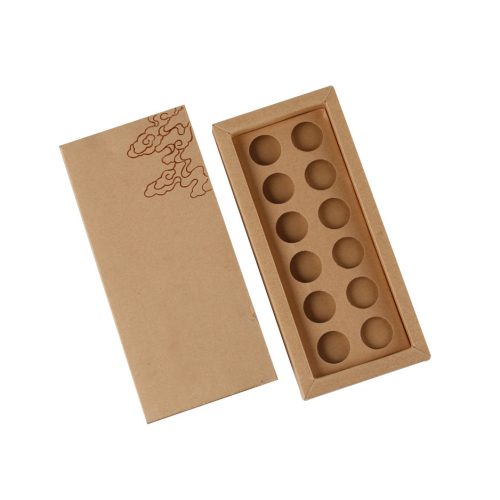
Which should you choose? Start with folded paperboard when presentation and product organisation are central. Consider corrugated inserts for partitions or structural support, and foam when the project calls for a specified cushioning or contact-surface solution. Treat these as starting points: approve the fit and test the complete packed product for its intended journey.
First, clarify what “cardboard insert” means
Buyers use “cardboard” for several paper-based constructions. A folded solid-paperboard tray, a corrugated divider and a shaped paper cushion are different designs. Ask the supplier to identify the board construction and grade, rather than quoting only “cardboard with cutouts.”
Corrugated board has a fluted layer between liners. Its structure offers support and cushioning, but the assembled insert still needs to suit the product load. The Fibre Box Association describes these general properties; they are not proof that a particular insert will pass your shipping conditions.
| Insert construction | Useful starting point | What to check before ordering |
|---|---|---|
| Folded paperboard | Printed presentation trays, coordinated gift sets and organised product layouts. | Cutout fit, support beneath the product, tab strength, assembly time and removal access. |
| Corrugated board | Partitions, folded supports and separation within mailers or shipping packs. | Flute and board grade, cut edges, load direction, crush behaviour and space needed inside the box. |
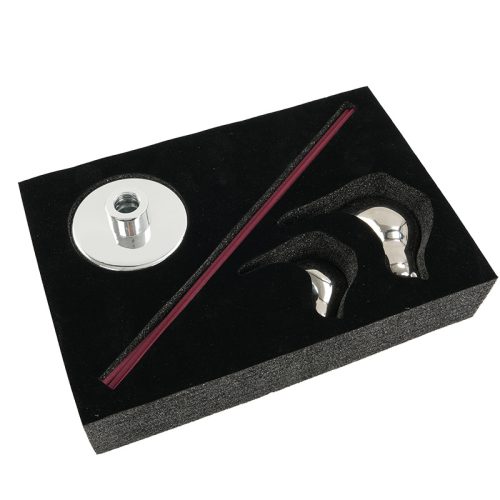
| Fabricated foam | Shaped cavities where cushioning, surface contact or repeated handling needs a defined material solution. | Polymer and grade, thickness, density, compression behaviour, cavity depth and contact with the product finish. |
“Foam” is also a broad label. Do not assume two foams of the same colour perform alike. Sealed Air’s fabricated-foam guidance illustrates the range of densities and properties available in polyethylene foam. The exact material and geometry matter more than a generic name.
Separate positioning, cushioning and presentation
An insert can keep items apart without providing enough impact protection for parcel delivery. A premium-looking tray may be appropriate inside a retail gift box while still needing a separate protective shipping pack.
Positioning and access
Check whether the insert supports the product body, prevents unwanted contact between items and leaves room for fingers. A cutout that grips a cap or pump can create a different loading problem from one that supports the bottle below it.
Protection in the complete pack
Check the insert together with the inner box, outer shipping carton, closures and any extra cushioning. Changing one component can change how the complete package behaves.
For a glass-bottle gift set, for example, assess the filled weight, caps, labels and spacing between bottles. For a small electronics kit, include cables and accessories and confirm any product-specific requirements. These are design questions, not a guarantee that either paper or foam is automatically suitable.
Check dimensions with the product in its final condition
Measure the actual item with its cap, label, sleeve or protective bag fitted. Record the filled weight where relevant. For mixed sets, specify the quantity and orientation of every component, not just the largest item.
- Define the reference dimensions. Confirm the finished product dimensions and the usable internal dimensions of the box. See our box measurement guide for the box brief.
- Agree on the fit. Ask the designer to propose clearances and tolerances for the chosen material. There is no single clearance suitable for every product and insert.
- Check loading and removal. Try the packing sequence and finger access. Confirm that the product can be removed without tearing the tray or forcing a delicate component.
- Check the closed box. Look for lid pressure on pumps, caps, corners or fragile details. Include any documents, tissue or accessories that will be packed above the insert.
Compare total packing cost, not the insert price alone
Ask whether inserts arrive flat, pre-folded, assembled or in separate layers. A lower unit price may come with more assembly work, extra packing space or a different freight basis. A foam cavity, a printed paperboard tray and a corrugated divider are not matching quotations unless their functions and delivery formats are comparable.
Keep the product layout, quantity per design, printing, finishing, sample scope, tooling, assembly format and delivery destination consistent. Ask which costs are one-off and which repeat when you reorder. Avoid choosing a material on an assumed percentage saving.
Review recycling claims component by component
A paper-based insert can simplify a paper-packaging design, but a coating, laminate, adhesive or attached foam layer can affect how it is handled. Removable components and clear material identification help you discuss disposal with the collection service used in the destination market.
The American Forest & Paper Association’s design guidance explains why non-fibre elements matter to paper-packaging recyclability. Check the actual construction and local collection arrangements before making a recycling claim. Neither “paper” nor “foam” alone proves universal recyclability or a lower environmental footprint.
Approve a physical sample before committing to the run
- Load the complete set. Use the actual product or an agreed equivalent with matching dimensions and weight.
- Check fit and presentation. Inspect alignment, unsupported areas, exposed cut edges, surface contact and access for removal.
- Try the packing process. Assemble several samples as the packing team would, including labels and accessories.
- Validate the shipping pack. Where transport protection is required, agree on a relevant test plan with the supplier or laboratory. A hand shake or visual approval is not a transit test.
- Record what was approved. Keep the sample version, product version, material specification, drawing and agreed acceptance criteria together.
ISTA’s test-procedure overview distinguishes screening and distribution-simulation approaches. Select a procedure for the actual journey and objective; this guide does not certify any insert or package. Our sample approval guide helps separate fit, print and production sign-off.
A brief you can send with your inquiry
Product: photos or drawings, finished dimensions, weight and fragile or scratch-sensitive areas.
Pack layout: items per box, orientation, accessories and how customers should remove them.
Box: internal dimensions, structure and whether it is a presentation box or part of a shipping pack.
Insert: paperboard, corrugated or foam options to assess; printing and any material restrictions.
Order: quantity per size and design, assembly format, sample needs, destination and required arrival date.
Approval: fit checks, shipping test requirements where applicable, and the person responsible for sign-off.
Questions buyers often ask
Can cardboard inserts protect fragile items?
A properly designed paper-based insert may form part of a protective pack. Its suitability depends on the product, load paths, material, box and shipping conditions. Validate the complete packed product rather than relying on the material name.
Do foam inserts always cost more?
There is no universal price ranking. Grade, cutting method, cavity depth, quantity, printing, assembly and freight can change the comparison. Request quotations against the same function and packing brief.
Can an insert be designed around an existing box?
Often, the existing box can be a design input. Supply a sample or confirmed internal dimensions, then check whether there is enough usable space for the proposed insert, product and removal clearance.
Plan the insert and the box together
Share your product dimensions, filled weight, pack layout and quantity per design. Gulupack can discuss an insert proposal alongside your custom paper packaging and clarify the sample scope before you order.
Further planning: paper packaging materials · all packaging resources. Technical references linked above explain general principles; project-specific fit and protection require their own validation.